


Special Silicone Rubbers
What Is Special Silicone Rubbers
Silicone rubber is an elastomer (rubber-like material) composed of silicone - itself a polymer - containing silicon together with carbon, hydrogen, and oxygen. Silicone rubbers are widely used in industry, and there are multiple formulations.
Advantages of Special Silicone Rubbers
Sterilisation
Silicone rubber is very commonly found in food and medical products, this is because silicone rubber has a non-porous nature which means that it will not be susceptible to a buildup of bacteria. Sterilisation and hygiene are such a huge matter in these industries and therefore having the most sterile and safe materials to use is hugely important.
There are also silver nanoparticles that can be blended into silicone which can act as antibacterial agents. These then work to prevent infestation of microbes like MRSA and E. coli growing and multiplying on the product in which silicone rubber has been used. Common appliances that you will find using silicone rubber are kitchen utensils, medical utensils and so much more.
Silicone is also an FDA-approved material which means that it has been specially formulated to meet the requirements of both the food and drug associations.
High Tensile Strength
For many reasons, silicone rubber can be used for far more applications than general-purpose silicones. One of these reasons is that the material was designed to have far better elongation and tear strength compared to the general purpose grade. This helps the products that they are used in to be more resistant to abrasion and fatigue.
Because of this, it is typically used in applications such as extrusions, moulding and calendering. This is because all of these applications involve the stretching and reshaping of the material so any tear strength or elongation weaknesses will result in the tearing of the material.
Low Chemical Reactivity
In many applications where chemicals are present, you will often find that silicone rubber is used. This is due to silicone’s low chemical reactivity. Unlike other rubbers, silicone does not have a carbon to carbon backbone, it has silicone to oxygen backbone. This means that where other rubbers are susceptible to damage from ozone, chemicals, extreme heat and other potential hindrances, silicone rubber can comfortably withstand them.
Versatility
Versatility is one of its most obvious advantages. The material can be used in a huge range of applications thanks to its countless unique benefits. It is very hard to find other materials that have the properties of silicone that can be used in such a variety of industries and applications.
Its ability to withstand both extreme heat and extreme cold also allows it to be used in several different environments. Many materials can often underperform or even not perform at all in harsh environments, whereas silicone rubber can be put through a variety of different environments and still perform perfectly.


Why Choose Us
Professional Team
We have a team of skilled and experienced professionals who are well-versed in the latest technology and industry standards. Our team is dedicated to ensuring that our customers get the best service and support possible.
Quality Control
All goods will undergo strict quality inspection before shipment. always insists on providing high-quality products. We firmly believe that quality is the basis of everything.
One Stop Solution
From the begining inquiry and throughout the entire process until you receive the goods. we are dedicated to supporting you every step of the way.
Quality Products
We use only the highest-grade materials and advanced manufacturing techniques to produce products that are reliable, durable, and perform to the highest standards.
Competitive Price
We have professional sourcing team and cost accounting team, stive to reduce cost and profit and provide you a good price.
Sustainable Development
Establish a good reputation and brand value in the industry, and promote the sustainable, stable, rapid and healthy development of the enterprise.
Special Silicone Rubbers-The Set Standard For The Medical Industry
The Following Are The 5 Benefits That Rubber Brings To The Medical Industry:


Biocompatibility
As compared to other elastomers, silicone rubbers are known to exhibit superior compatibility with human tissue and body fluids and an extremely low tissue response when implanted. Since silicones are odourless and tasteless, they do not support bacteria growth and stain or corrode other materials. Also, they are often formulated keeping in mind biocompatibility guidelines for medical products that comply with FDA, ISO.
Temperature Resistance
Silicones have excellent temperature resistance and are known to withstand a wider range of temperature extremes than nearly all other elastomers. With the capacity to remain stable through temperature variations from 75°to 500°F. They have amazing heat resistance and ability to be sterilized by multiple methods used for medical devices, including dry heat, steam autoclaving, ethylene oxide, gamma radiation and electron beams.
Mechanical properties
Silicones have high tear resistance, excellent tensile strength, good elongation, flexibility, and low compression set. Softer silicone retains its softness indefinitely.
Electrical performance
Silicones surpass all similar materials when it comes to insulating properties and versatility in electrical applications. Silicone rubber is non-conductive and maintains dielectric strength under extreme temperatures, outperforming most traditional insulation materials.
Chemical Resistance
Silicone rubber has considerable resistance powers that give it special advantages. Silicones have the ability to resist water and many chemicals, including some acids, oxidizing chemicals, ammonia, and isopropyl alcohol. Concentrated acids, alkaline, and solvents should not be used with silicones.
Types Of Special Silicone Rubbers
Conductive Silicone Rubber
Filling type of conductive silicone rubbers is to use silicone rubber as the foundation, and to fill conductive fillers and crosslinking agents to vulcanize them together to be manufactured. To compare with general conductive rubbers, the advantages of conductive silicone rubbers are small volume resistivity, low hardness, cold and heat resistance, aging resistance and good formation and manufacturing processes.
It is now the conductive silicone rubber which has the largest consumption quantity. It is very good at being used to manufacture conductive, complex shaped and slim structural conductive rubber products. It is widely used in aerospace, electrics, computers, constructions, medicine and food. It could also be used as anti-static materials and electromagnetic shielding materials.
Heat-Shrinkable Silicone Rubber
Heat-shrinkable silicone rubber is one new type which is developed in 60s of 20th century. It has the unique properties of general silicone rubber like cold and heat resistance, humidity resistance and excellent electrical properties. It also has the feature that to cover the whole item tightly and shrink to 50% when being heated under 150℃ in simple ways. The operation is simple which is very convenient for do it at once. It is widely used in different kinds of electronical parts, the isolations, protections and connections of instrumentations.
Moulding Silicone Rubber
RTV silicone rubber has excellent simulation, demoulding and very low shrinking rate. It also has properties like easy to be shaped and resistance on aging and heating. Therefore, it is a very excellent moulding material. Many formation craftiness all use RTV silicone rubber to make moulds to replace metallic moulds or moulds made of other materials. At present, silicone rubber soft moulds are widely used in high-frequency leather and shoes manufacturing, copies of relics, plastic formation and the formations of waxes and some alloys. The corresponding performances are also excellent.
Foam Silicone Rubber
Foam silicone rubber is a new, soft, porous and multifunctional macromolecular elastomer. It is made from the silicone rubber which has been foaming. Foam silicone rubber material refers to the composited material which is to use silicone rubber materials as the foundation with inner porous materials which have many air foams. It is also called sponge silicone rubber or microporous silicone rubber.
It not only keeps the excellent properties of silicone rubber, but also has the properties like light weight, sound isolation, heating resistance, electrical isolation, sealing ability and some other excellent ones. It is used as high-effectively material in national defense, aerospace, traffics, electronics, industry and agriculture. Some functional and high-efficiency foaming materials are also playing utmost important roles in militia and aerospace and many other advanced areas.
High Tensile And Tear Strength
While the tear strength of silicone rubbers is typically around 15kgf/cm, higher tensile and tear strength products (30kgf/cm to 50kgf/cm) are available, ideal for complex moldings. Silicone Rubber Molding can be used for applications requiring greater tear strength.
Incombustibility
Silicone rubbers resist easy combustion and, with the addition of flame retardants, can achieve incombustibility. They meet combustibility classification standards such as UL94 and UL94V-0, releasing no smoke or toxic gases when burned.
Cold Resistance
Silicone rubbers have a low brittle point, ranging from 76°F to 94°F, in contrast to the 68°F to 86°F brittle point of regular organic rubbers.
Thermal Conductivity
With a thermal conductivity of approximately 0.5 e+3 cal.cm.sec.°C, silicone rubbers find application in heat sink sheets and heating rollers due to their excellent thermal conductivity.
Heat Resistance
Silicone rubbers excel in heat resistance compared to typical organic rubbers. Their properties remain virtually unchanged even at high temperatures. Heat Resistant Silicone Rubber is ideal for permanent use in rubber parts exposed to elevated temperatures.
Non-Stickiness Properties Non-Corrosive
Chemically inert, silicone rubbers possess excellent mold-releasing properties and do not corrode other substances. They find use in various applications, including fixed rolls for photocopy machines, printing rolls, sheets, and lost wax processes.
Resistance To Steam
Silicone rubbers maintain low water absorption, around 1%, even during prolonged water immersion. They generally resist deterioration when in contact with steam, although high-pressure steam above 302°F may cause siloxane polymer breakdown.
Electrical Properties
Silicone rubbers exhibit excellent electrical insulating properties and stability across a wide range of frequencies and temperatures. They resist deterioration when immersed in liquid and show remarkable resistance to corona discharge and high-voltage electricity.
Transparency And Coloring
Unlike carbon-infused organic rubbers, silicone rubbers can be highly transparent by incorporating fine silica. This transparency allows easy coloration with pigments, enabling the production of vibrant, colorful products.
Gas Permeability
Silicone rubbers offer better gas and water vapor permeability, making them suitable for applications like gas-water separating membranes for artificial heart-lung and oxygen-enriching devices.
Compression Set
Utilized in packing materials subjected to compressive deformation under heating conditions, silicone rubbers exhibit a stable compression set over a wide temperature range from 140°F to 482°F. Post-cure is recommended, especially for products with a low compression set.
Why Special Silicone Rubbers Can Be Used As a Medical Polymer Material
Medical polymers refer to polymer materials used in medicine and are an emerging discipline between modern medicine and polymer science. It is an inanimate material used for medical purposes in contact with living tissues and has the ability to diagnose, treat or replace tissues and organs in the body and enhance their functions. It involves a variety of marginal disciplines such as physics, chemistry, biomedical applications, biology, pathology, medicine, blood transfusion, etc. Medical-grade silicone rubber is one of the important varieties of medical polymer materials.
Silicone Rubber Is a Very Good-Performance Medical Material
Consistency rubber (HCR) including general-purpose HCR for extrusion and molding and biomedical HCR utilized in long-term implantable applications. High-consistency rubber HCR medical grade high-consistency rubber is used in drug-eluting systems, liquid silicone rubber lsr, and medical grade LSR for healthcare applications. It has a lower material cost than other materials, allows for multiple components, and has great practicality, is not easy to reject reactions, will not be harmful to the human body, and biological adaptability is good, and safety is comparable to food-grade silicone.
Silicone Rubber Products Have Very Good Medical Characteristics
Colorless, non-toxic, high-temperature resistance, oxidation resistance, softness, transparency, and other characteristics, silicone products can solve some medical problems and human health problems, to meet the medical role of patients.
It Is The Material Of Choice For Making Various Medical Elastomer Products
With coagulation properties; toxicity test results in line with medical requirements; good biocompatibility in clinical applications, no teratogenic effects, no allergic reactions; excellent toughness and elasticity, good processing performance, processing methods (platinum cured, injection molded, etc.) excellent wear resistance, soft touch, high elongation, moisture resistance, resistance to a variety of chemical properties.
As Silicone Rubber Has The Above Characteristics
Suitable for making various shapes of tubes/sheets and other products, so silicone rubber is currently the most widely used medical polymer material, can basically meet the different requirements of a class of materials, and the amount of its use in a continuous and steady growth trend.
How To Compare Between Silicone Rubber Vs. Thermoplastics Vs. TPE
|
Comparison With |
Silicone Rubber Benefits |
|
Latex |
Lot-to-lot consistent due to controlled synthetic process, vs. organic lot-to-lot variations Superior bio-compatibility Higher clarity Better electrical insulation properties Stability over a broader temperature range |
|
PVC |
Inertness and absence of leachable additives Superior bio-compatibility Stability over a broader temperature ranges Superior sterilization properties |
|
Polyurethane & Vinyl |
Plasticizer- & toxin-free Superior bio-compatibility Broader temperature stability Lower compression set Better clarity Greater softness |
|
Thermoplastic Elastomers (TPE) |
Superior bio-compatibility Superior chemical resistance Lower durometer Lower compression set |
Silicone rubber is used in a wide range of industries, including automotive, aerospace, medical, and consumer products. The material has excellent thermal and electrical properties as well as good resistance to extreme temperatures. It also exhibits very low gas permeability, making it ideal for applications requiring insulation or air-tight seals.[/caption]
Silicone rubber is also widely used in the food and beverage industry due to its resistance to extreme temperatures and non-toxicity. It's commonly used for baking mats, oven mitts, spatulas, and other kitchen utensils. Due to its biocompatibility, silicone rubber is also ideal for medical applications such as catheters, tubing, and implants.
Silicone rubber is a type of synthetic elastomer that offers excellent resistance to weathering, oxidation, and heat. It also has superior electrical insulation properties and a low compression set. It can be found in a variety of forms, including solid sheets, sponges, foam, and liquid silicone rubbers. Each form has unique characteristics that make it suitable for different applications.
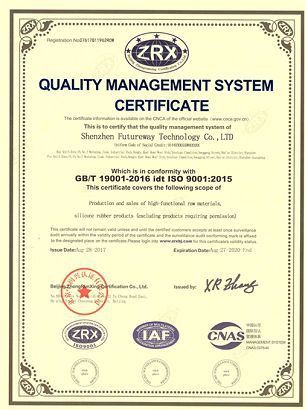
Certifications


Our Factory
Futureway is a private material enterprise founded in 2010 by several experts from world's top 500 material companies. The company is committed to breaking through the technical and application barriers in the field of high-tech materials, focusing on the building and application development of the technology platform of fluoropolymers and silicone materials.

FAQ
Q: How are silicone rubbers different from all other rubbers?
Q: Is silicone rubber stretchy?
Q: What is the difference between silicone rubber and natural rubber?
Q: How do you harden silicone rubber?
Q: Is silicone rubber bendable?
Q: What is the difference between silicone rubber and rubber?
Q: What does silicone rubber do?
Q: Silicone Rubber (HTV) Application?
Q: Process of Silicone Rubber (HTV)?
Q: Molecular structure of Silicone Rubber (HTV)?
Q: Are silicone rubber products toxic or hazardous?
Q: Is silicone rubber real rubber?
As one of the most professional special silicone rubbers manufacturers and suppliers in China, we're featured by quality products and competitive price. If you're going to wholesale customized special silicone rubbers made in China, welcome to get quotation from our factory.
Silicone Adhesive, Microwave Coaxial Cable, Virgin PTFE Tape