


Fluoroplastics
What Is Fluoroplastics
Fluoroplastics is a group of synthetic materials that are known for their unique combination of properties, including their non-stick and low-friction properties, high resistance to heat, chemicals, and corrosion, as well as excellent electrical and thermal insulation properties. They are made up of long-chain molecules containing carbon and fluorine atoms, which provide their exceptional properties.
Advantages of Fluoroplastics
Durable
They are highly durable materials that can withstand harsh environments and extreme temperatures without breaking down or deteriorating. They have a low coefficient of friction, which means they are less likely to wear out or become damaged due to friction or abrasion. They are also highly resistant to impact and deformation, making them ideal for use in high-stress applications.
Wide Effective Range of Temperatures
Fluoroplastics are able to operate in a wide range of temperatures, from cryogenic temperatures to high-temperature environments. They exhibit excellent thermal stability, which means they can withstand exposure to high temperatures without melting or degrading. This makes them ideal for use in high-temperature applications such as aerospace, automotive, and chemical processing.
Corrosive Resistant
They are highly resistant to corrosive chemicals, such as acids, bases, and solvents. They do not react with these chemicals, which makes them ideal for use in harsh chemical environments, such as chemical processing plants and laboratories.
Inert, Non-toxic, and Bio-compatible
Fluoroplastics are inert materials that do not react with other substances, making them ideal for use in applications where purity is critical, such as in the pharmaceutical and medical industries. They are also non-toxic and bio-compatible, meaning they can be safely used in contact with human tissue and fluids, making them ideal for use in medical devices and implants.


Why Choose Us
Professional Team
We have a team of skilled and experienced professionals who are well-versed in the latest technology and industry standards. Our team is dedicated to ensuring that our customers get the best service and support possible.
Quality Control
All goods will undergo strict quality inspection before shipment. always insists on providing high-quality products. We firmly believe that quality is the basis of everything.
One Stop Solution
From the begining inquiry and throughout the entire process until you receive the goods. we are dedicated to supporting you every step of the way.
Quality Products
We use only the highest-grade materials and advanced manufacturing techniques to produce products that are reliable, durable, and perform to the highest standards.
Competitive Price
We have professional sourcing team and cost accounting team, stive to reduce cost and profit and provide you a good price.
Sustainable Development
Establish a good reputation and brand value in the industry, and promote the sustainable, stable, rapid and healthy development of the enterprise.
The Different Fluoroplastics Materials
The More Common Members Of The Fluoroplastics Family Are:


PTFE (PolyTetraFluoroEthylene)
Also known as Teflon, PTFE is the grandfather of all fluoroplastics; it is the most unusual and exhibits the best performance in terms of temperature and chemical resistance, and non-stick properties. Compared with similar fluoropolymers, PTFE usually has the best price : performance ratio.
Due to its unique properties, PTFE is ideal for applications in electrical insulation and the protection of electronic components. PTFE is also widely used in high temperature applications, from fire critical applications to terminal insulation on heating elements and jet engines, and external aircraft fittings.
FEP (FluoroEthylenePropylene)
FEP was developed as a “melt processable” version of PTFE. That is, it can be processed by normal plastic methods and can easily be welded and re-moulded. FEP has very similar properties to PTFE, but has a lower maximum operating temperature of +200°C instead of +260°C. FEP is also highly transparent and resistant to UV radiation.
FEP is widely used for laboratory applications that involves critical or highly corrosive processes. Other applications include auto sampling, chromatography, medical devices, UVC sterilisation equipment, insulation of high temperature cables and encapsulation of sensitive electrical components.
PFA (PerFluorAlkoxy)
PFA was developed as a high temperature version of FEP - it has similar properties, but it can be used at temperatures up to +260°C. PFA is a melt-processable fluoropolymer which can be injected, compressed and transfer moulded.
PFA has similar physical and chemical properties to PTFE, but it has 10 times the flex life and less permeation. PFA has an outstanding crack and stress resistance and a low coefficient friction. The main disadvantage of PFA is that it is more expensive than PTFE or FEP.
From medical tubing to heat exchangers, semi-conductor baskets, pumps and fittings, and valve liners, PFA is widely used in applications that require a higher purity grade, excellent chemical resistance and a high working temperature.
ETFE (Ethylene Tetra Fluoro Ethylene Copolymer)
ETFE is a normal thermoplastic, but it is much harder than PTFE & FEP and similar in hardness to nylon - It is therefore used as an “Engineering Plastic”. The improvement in stiffness is paid for by reduced chemical resistance and working temperature.
E-CTFE (Ethylene-Chloro Tri Fluoro Ethylene)
Used mainly for its chemical resistance, E-CTFE is a tough fluoroplastic with similar properties to ETFE.
PVDF (Poly Vinylidene Fluoride)
PVDF is a very hard plastic roughly comparable to E-CTFE and relatively cheap compared with other fluoroplastics. PVDF has good chemical resistance, but not as good as E-CTFE or ETFE.
PVDF tubing is particularly easy to hand weld and used in conjunction with PVDF sheet can be used to fabricate chemical laboratory equipment.
PVF (Polyvinyl Fluoride)
Also known as Tedlar, PVF is an extremely robust and durable fluoroplastic with limited chemical and temperature resistance. PVF is tougher and more economical than FEP. PVF is normally used as a film in gas bags used for vehicle emission testing, solar heating panels and printing circuit laminating.
MFA (Methyl Fluoroacetate)
MFA has similar chemical, electrical and temperature properties than PFA, but offers higher clarity, low haze values and high light and UV transmittance.
EPTFE (Expanded PolyTetraFluoroEthylene)
Expanded PTFE (ePTFE) is microporous so air-permeable, and is perfect for any applications that require a permeable PTFE tube. Being microporous, ePTFE is significantly different to conventional PTFE tubing - the material is air-permeable, soft and flexible, and feels somewhat like smooth, spongey marshmallow to the touch.

The unique properties of fluoroplastics make them high performance materials with limitless possibilities. As a result, PTFE, FEP and PFA can meet severe environmental conditions and are ideal for use in many medical, food and drink, automotive, oil and gas, and other applications.
The combination of low friction and temperature resistance allows fluoropolymers to be used in applications such as sleeve bearings, push-pull cables and non-stick roller covers. Virtually total chemical resistance at temperatures up to 260°C means PTFE, FEP and PFA can handle the transport of all fluid chemicals and solvents.
Fluoroplastics can also be used to protect less resistant materials, such as glass, stainless steel on stirrers, thermometers, probes and vat heaters. Due to the excellent dielectric and other properties combined, PTFE and FEP find many unique applications in electric and electronic engineering, such as insulation of miniature components and connections in hot environments.
Inert, non-toxic and bio-compatible properties are sought after by medical device manufacturers for applications such as intravenous catheters, catheter introducers and angiographic catheters. Fluoropolymers are also ideal for day-to-day applications and everyday uses, from ski bindings to waterproof jackets.
Why Do We Use Fluoroplastics
The performance characteristics of fluoroplastics: polytetrafluoroethylene and perfluoro (ethylene-propylene) copolymer (FEP) are completely composed of carbon atoms and fluorine atoms, while polyvinylidene fluoride (PVDF) and polyvinyl fluoride (PVF) molecules It also contains hydrogen atoms, and polychlorotrifluoroethylene also contains chlorine atoms. The excellent performance of fluoroplastics is achieved by the high binding energy between carbon atoms and fluorine atoms. The main chain skeleton of PTFE is carbon atoms, and the surrounding is completely surrounded by fluorine atoms, so its various properties are high, while PFA, FEP, ETFE and other varieties have a low softening point due to the influence of side groups, and other properties There are also changes.
♂Thermal properties Fluoroplastics have flame retardancy and excellent heat resistance. The continuous use temperature of PTFE and PFA can reach 260℃, and it can be used at 300℃ for a short time. The use temperature of FEP is 60℃ lower than them. The higher PCTFE can be used at 120°C. Fluorine plastics, such as long-term use at high temperatures, will cause changes in crystallinity, so special attention must be paid when manufacturing equipment lining.
♂Chemical resistance Fluoroplastics have excellent chemical resistance and solvent resistance, especially PTFE, PFA, FEP, etc., which are not corroded by acids, alkalis and solvents. But molten alkali metals, fluorine, and trifluorochlorinated hydrocarbons have varying degrees of influence on them. PCTFE, ETFE, PVDF, etc. are slightly less resistant to chemicals in fluoroplastics, but they have much better corrosion resistance than other plastics.
♂Electrical properties The electrical properties of fluoroplastics, especially high-frequency electrical properties, are hard to match with other materials. The molecules of PTFE, FEP, and PFA have very low polarity, small changes in a wide temperature and frequency range, stable relative dielectric constant, low dielectric loss, and excellent electrical insulation. Among them, PVDF also has specific piezoelectricity and pyroelectricity, which can be used to make piezoelectric materials.
♂Mechanical properties of fluoroplastics molecules increase in hydrogen and chlorine atoms, and their tensile strength will also increase. The embrittlement temperature of PTFE and PCTFE is extremely low, showing excellent low temperature performance. PTFE has a low friction coefficient and a specific self Lubricity, but PTFE has its own shortcomings such as large wear and cold flow. Various fillers can be used to improve wear resistance and overcome cold flow.
♂Non-stickiness Fluoroplastics have specific non-stickiness. In particular, molecules such as PTPE, FEP, and PFA have high fluorine content, and the surface contact angle is very large, making the liquid on the surface of the fluoroplastic product spherical. It is not easy to bond with resin, so it is often used to make non-sticky layer on the surface of cookware.
♂Weather resistance All kinds of fluoroplastics have excellent weather resistance, and their various properties remain unchanged even if exposed to harsh temperatures for a long time.
♂Hydrophobicity Fluoroplastics have low water absorption, especially PTFE. Its hydrophobicity can be used to manufacture breathable and impermeable composite fabrics and other equipment.
The First Is The Difference In Chemical Structure:
PFA has added perfluoroalkoxy, which is equivalent to replacing one fluorine atom in PTFE with perfluoroalkoxy. A carbon is directly connected to an oxygen, and then the oxygen is connected to a group such as perfluoromethyl or perfluoroethyl. Compared with PTFE, the melt viscosity is reduced to facilitate processing. The other properties are not much worse than PTFE.
The First Is The Difference In Chemical Structure:
PFA-has the same excellent properties as polytetrafluoroethylene, and has good thermoplasticity. It can be processed by ordinary thermoplastic resin processing methods. It is made by copolymerization of tetrafluoroethylene and perfluoropropyl vinyl ether in a certain proportion in an aqueous medium containing perfluorocarboxylate dispersant and persulfate initiator. It is a white translucent particle. It not only has the same operating temperature as PTFE, but also has better mechanical strength (about 2 to 3 times) at 250°C, and has excellent stress crack resistance.
It has a wide processing range and good molding performance, and is suitable for molding processing such as compression molding, extrusion molding, injection molding, and transfer molding. It can be used to make wire and cable insulation sheaths, high frequency and ultra high frequency insulation parts, chemical pipelines, valves and pumps corrosion-resistant lining; special parts for machinery industry, various anti-corrosion materials for light and textile industry, PTFE anti-corrosion lining Wait for the electrode.
It is made by extruding meltable polytetrafluoroethylene pellets, with translucent milky white appearance, smooth surface, and dense and uniform cross-section. It is specially used for welding PTFE plates and tubes, so that PTFE products with simple shapes can be welded into products with complex shapes and larger sizes. The aqueous dispersion is a copolymer obtained by copolymerizing tetrafluoroethylene and perfluoropropyl vinyl ether, adding an emulsifier, and concentrating at a certain temperature. The solid content is 30%±1%.
The appearance is milky white or light yellow translucent. It has various excellent properties of fusible polytetrafluoroethylene resin. It can be used for a long time at 260℃, and developed into advanced coatings with its excellent anti-sticking, anti-corrosion and easy processing properties. It can be sprayed and dipped, and is widely used in copy technology and food industry as anti-stick and anti-corrosion materials.
PTFE-Polytetrafluoroethylene is made by polymerizing tetrafluoroethylene monomer by suspension method or dispersion method. Molecular weight=5.2×10⁵-4.5×10⁷. White powder, 400 mesh accounted for 75%, tasteless, non-beauty and non-toxic. The relative density is 2.1-2.3, the refractive index is 1.37, the glass transition temperature is 327℃, and the thermal decomposition temperature is 415℃. Above 400°C, there is a slight weight loss and decomposes toxic gases. Use temperature -250~260 ℃, use at 210 ℃ up to 10000h.
Excellent chemical resistance, resistance to any strong acid (including aqua regia), strong alkali, grease, insoluble in any solvent, very low friction coefficient, good wear resistance, and self-lubricating. Excellent aging resistance. Excellent electrical performance, good arc resistance. It is non-sticky, almost all sticky substances cannot adhere to its surface, and it is completely non-flammable. Known as the “Plastic King”. Tensile strength (MPa)>23 and elongation (%)>250.
Common Properties Of Fluoroplastics
Now, Let Us Look At The General Properties Of Different Kinds Of Fluoroplastics:
General Properties
Fluorinated plastic is known for its excellent chemical resistance, low coefficient of friction, and high melting point, which allow them to withstand a wide range of temperatures, typically from -200°C to 260°C. They are non-combustible and have low absorption rates for most chemicals, making them ideal for use in harsh environments and applications that require high purity.


Thermal Properties
With a high melting point, typically above 327°C, they exhibit low coefficients of thermal expansion, which allow them to maintain their dimensional stability over a wide temperature range. They have low thermal conductivity, which makes them excellent insulators, and their thermal properties are largely unaffected by exposure to chemicals or moisture.
Mechanical Properties
They exhibit remarkable mechanical properties, such as high tensile strength and excellent hardness. They are known for their exceptional resistance to wear, deformation, and fatigue, making them ideal for use in demanding applications where durability is critical. Their unique molecular structure also allows them to maintain their mechanical properties in extreme temperatures and harsh chemical environments.
Electrical Properties
Fluoro plastics possess exceptional electrical properties that make them highly sought after in the electrical and electronics industries. They exhibit low dielectric constant and high dielectric strength, which means they can withstand high voltages without breaking down or losing their insulating properties. Their high purity and chemical resistance also make them ideal for use in high-performance electrical applications where reliability and safety are critical.
Fluoroplastics - An Indispensable Component Of Modern Technologies
Fluoroplastics, known for their exceptional properties such as chemical and temperature resistance, play a central role in many sectors of modern industry. Their chemical resistance makes them ideal for applications in the chemical industry, where they are used as coatings and seals to protect equipment from corrosive substances.
At the same time, their ability to withstand extreme temperatures allows them to be used in areas that require reliable performance under difficult thermal conditions, such as the aerospace industry. they have excellent dielectric properties, making them valuable insulators in electronics and electrical systems. Their smooth surface and low coefficient of friction also make them ideal for applications where minimal friction is required.
The debate surrounding the planned ban on PFAS, which includes fluoroplastics, is particularly relevant in this context. While environmentalists are calling for a ban due to the environmentally harmful and unhealthy properties of many PFAS, the industry is emphasising the unique advantages of fluoroplastics. "Without fluoroplastics, there would be no Green Deal," argue the Bavarian chemical associations, for example. At a round table on the Chamber of Industry and Commerce's PFAS ban proposal, the Bavarian chemical associations argued that the enshrined climate targets would not be achievable without the use of fluoropolymers in sustainable technologies.
A ban could also have far-reaching effects on numerous branches of industry, including those that are of central importance for the implementation of the European Green Deal. In this area of tension between environmental protection and industrial requirements, the search for a balanced approach that takes into account both environmental protection and the needs of industry becomes a key challenge.
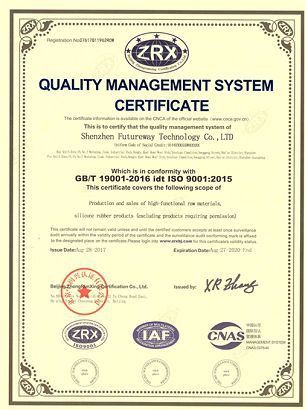
Certifications


Our Factory
Futureway is a private material enterprise founded in 2010 by several experts from world's top 500 material companies. The company is committed to breaking through the technical and application barriers in the field of high-tech materials, focusing on the building and application development of the technology platform of fluoropolymers and silicone materials.

FAQ
Q: How are fluoropolymers manufactured?
Q: What is the difference between fluorocarbon and fluoropolymer?
Q: What are the raw materials for fluoropolymers?
Q: What are fluoro polymers used for?
Q: Is Fluoroplastic same as Teflon?
Q: What is difference between PFA and PTFE?
Q: Are fluoropolymers biologically inert?
Q: What are the main uses of fluorocarbons?
Q: What is Fluoroplastic coating?
Q: Are fluorocarbons still used?
As one of the most professional fluoroplastics manufacturers and suppliers in China, we're featured by quality products and competitive price. If you're going to wholesale customized fluoroplastics made in China, welcome to get quotation from our factory.
PTFE Venting Membrane, Density Conductive Foam, Car Battery Insulation Pad