


Silicone Sponges
What Is Silicone Sponges
Silicone sponge is an excellent gasketing and cushioning material that is made from a gum type silicone. Gaskets made from this material are created by vulcanizing the rubber and curing it in an oven. They are ideal for applications with environmental exposure.
Advantages of Silicone Sponges
Extreme Temperature Resistance
Silicone can withstand extreme temperatures from as low as about -100oF (-70oC) to as high as around 500oF (260oC). Given the thermal stability of a silicon sponge, it can be used in environments with sub-zero or extremely high temperatures without changing its physical and chemical properties.
Excellent Environment-resistant Properties
Apart from its ability to hold up despite exposure to extreme temperatures, a closed-cell silicone sponge can also resist environmental elements from ozone and UV rays to water, mildew, and bacteria.
Outstanding Compression Set Resistance
Closed-cell silicone sponges can readily return to their original shape after being temporarily deformed because of their excellent compression set resistance properties. This material can withstand stretching, compression, and other types of deformation without ruining the natural shape.
Exceptional Acoustic, Electrical, and Thermal Insulation
Given its closed-cell structure, a closed-cell silicone sponge acts as an insulation against noise, vibrations, electricity, and heat.


Why Choose Us
Professional Team
We have a team of skilled and experienced professionals who are well-versed in the latest technology and industry standards. Our team is dedicated to ensuring that our customers get the best service and support possible.
Quality Control
All goods will undergo strict quality inspection before shipment. always insists on providing high-quality products. We firmly believe that quality is the basis of everything.
One Stop Solution
From the begining inquiry and throughout the entire process until you receive the goods. we are dedicated to supporting you every step of the way.
Quality Products
We use only the highest-grade materials and advanced manufacturing techniques to produce products that are reliable, durable, and perform to the highest standards.
Competitive Price
We have professional sourcing team and cost accounting team, stive to reduce cost and profit and provide you a good price.
Sustainable Development
Establish a good reputation and brand value in the industry, and promote the sustainable, stable, rapid and healthy development of the enterprise.

Silicone sponge is made of a fine cellular construction that is mainly composed of non-interconnecting cells. Most silicone sponge currently commercially available on the market is created from the gum-based polydimethylsiloxane (PMDS). PMDS is the most widely used silicone inorganic polymer today. The polymer is chemically inert and non-flammable, making it a popular choice for industrial purposes.
When heat cured, the silicone elastomer expands, creating a closed-cell sponge structure. The expanding process creates compressible air pockets in a manner similar to when yeast is added to bread. The resulting expanded closed-cell sponge has many of the performance advantages of solid silicone, but in a form that is more softer and malleable.
The sponge is a highly compressible material that is ideal for creating seals. Thanks to its closed cell construction, it absorbs little moisture and is therefore a good water-seal even when only subjected to low compressive forces. The sponge can also withstand a wide range of temperatures, from -60c to 260c, as well as UV and ozone resistance. Additionally, silicone sponge has superb vibration isolation qualities and is able to reduce the effects of shocks to any item it is used to protect.
Like silicone rubber, silicone sponge materials feature properties that allow for them to be used in high performance applications, often in extremely demanding environments.
Silicone sponge maintains high performance and a long-life span, even when exposed to extreme temperatures, ranging between -60°C and 230°C. In addition to temperature resistance, silicone sponge is highly waterproof as the closed cell structure prevents any water from wicking through the sponge when subjected to low pressures. This structure also prevents the ingress of air and dust, making for a great sealing material.
A further key property of silicone sponge is resilience against UV sunlight and ozone exposure. Combined with the above properties, this makes for a material that is ideally suited to outdoor applications, even when weather conditions are extreme.
For applications where flammability requirements are needed, silicone sponge can be supplied in flame retardant grades.
Whilst resistant qualities are certainly important, the pliability and versatility of silicone sponge materials cannot be ignored; silicone sponges can be supplied in sheet form, cut into strips or gasket shapes (simple or complex), or extruded into standard or bespoke profiles, to suit their intended application.

UL Recognized Silicone Sponges & Foams
In addition to commercial grade silicone sponge products, Auburn now offers two new grades of soft silicone rubber gasket material and four new grades of silicone foam. R-10400 flame retardant silicone sponge is a medium-density flame-resistant grade of silicone sponge that will pass UL-94 Flame Testing with V-0 rating from 1/8" (0.125") and up. R10490 fluorosilicone sponge is a modified silicone elastomer, which is often used as the material of choice for applications involving oils and fluids that would degrade other sponge materials.
The four new UL-94VO silicone foams offered by include HT-800 medium firmness cellular silicone foam that combines the lightness of a foam along with the enhanced sealing capabilities of a traditional sponge rubber; HT-820 firm grade silicone foam that provides the same benefits as HT800 with improved durability and sealing: HT-840 extra-firm grade silicone foam that has the highest tear strength and tensile strength available in foam.
HT-870 soft grade silicone foam that offers maximum compressibility, softness and durability. These products are ideal for sealing outdoor enclosures, protecting electronics from shock and heat, and providing cushioning or vibration isolation for various applications, sealing or protecting various outdoor communications equipment, electronic equipment, or lighting enclosures and providing protection against wind-driven rain or fire. BF-2000 Ultra Soft Silicone Foam is a highly compressible silicone foam.
The combination of low weight and softness makes this flame retardant foam ideal for transportation, industrial, and electronics applications where low closure force and dust sealing are critical. Compressibility, softness and durability allow BF-1000 Extra Soft Silicone Foam to adapt to a variety of environments, making it an ideal choice for sealing outdoor enclosures, protecting electronics from shock and heat, and providing cushioning or vibration isolation for various applications.
What’s The Difference Silicone Foams And Silicone Sponge
Silicone foam and silicone sponge are both versatile materials used in various industries, They are two different materials with distinct properties. Here's how they differ:


Composition: Silicone foam is typically composed of silicone rubber and a blowing agent, which creates gas bubbles or cells in the material. This results in a more open-cell structure, similar to regular foam materials like polyurethane foam and has interconnected air pockets that allow for airflow and compression. On the other hand, silicone sponge is made by incorporating a filler material into the silicone rubber, creating a closed-cell structure, meaning its cells are sealed off from each other.
Density & Compression: Silicone foam generally has a lower density and is softer compared to silicone sponge. It is more compressible and offers better cushioning and shock absorption properties and will quickly recover its shape when pressure is released. Silicone sponge, being denser and more rigid, provides higher compression strength and is better suited for applications requiring stability and resistance to deformation.
Thermal Insulation: Due to their differing structures, silicone foam and silicone sponge have different thermal insulation properties. Silicone foam, with its open-cell structure, allows air circulation within the material, making it a better thermal insulator. Silicone sponge, with its closed-cell structure, offers less thermal insulation but provides superior resistance to heat transfer - it has a higher compressive strength and slower recovery rate.
Water Absorption: Silicone foam has higher water absorption capabilities due to its open-cell structure, which can be advantageous in certain applications, such as sealing against moisture or creating water-resistant barriers. Silicone sponge, with its closed-cell structure, has lower water absorption properties.
Applications: Both silicone foam and silicone sponge find applications in various fields. Silicone foam is commonly used in cushioning, padding, and vibration dampening applications. Silicone sponge is often utilised for sealing, gap filling, insulation, gaskets, thermal management applications and other applications requiring a reliable barrier against external elements. It provides a reliable seal against dust, air, water, and other environmental elements. Silicone foam, with its open-cell structure, is not ideal for sealing purposes as it allows for permeability.
High Temperature Silicone Sponge is a type of silicone rubber material that can withstand high temperatures up to 500°F. It is known for its excellent thermal stability, flexibility, and resilience, making it ideal for applications in various industries such as automotive, aerospace, electronics, and construction.
The High Temperature Silicone Sponge Market is expected to grow at a CAGR of % during the forecast period. The increasing demand for high temperature-resistant materials in industries such as automotive and aerospace is driving the growth of the market. Manufacturers are focusing on developing innovative products with improved properties to meet the evolving needs of the end-users.
One of the latest trends in the High Temperature Silicone Sponge Market is the development of lightweight and low-density silicone sponges that offer improved performance and cost-effectiveness. These advancements are expected to create new growth opportunities for the market players in the coming years. Additionally, the growing focus on sustainability and environmental regulations is driving the demand for eco-friendly silicone sponge materials in the market.
Silicone Sponge: A Must-Have Material for Heat Press Machines
If you're in the business of printing on t-shirts, hats, or other apparel, you're probably familiar with heat press machines. These machines use a combination of heat and pressure to transfer designs onto fabrics, creating high-quality and long-lasting prints.
One essential component of a heat press machine is the silicone sponge. This sponge is used to distribute pressure evenly across the surface of the fabric, ensuring that the design is transferred smoothly and evenly.
Here's How Silicone Sponge Works In a Heat Press Machine:
Even Pressure Distribution: When a heat press machine applies pressure to the fabric, the silicone sponge helps to distribute that pressure evenly across the entire surface of the fabric. This ensures that the design is transferred smoothly and evenly, without any wrinkles or creases.
Temperature Regulation: Silicone sponge also helps to regulate the temperature of the heat press machine. It acts as a heat insulator, helping to maintain a consistent temperature throughout the machine, which is essential for creating high-quality prints.
Durability: Silicone sponge is a durable material that can withstand high temperatures and constant use. It won't break down or deteriorate over time, ensuring that your heat press machine stays in good condition and continues to produce high-quality prints.
Easy To Clean: Silicone sponge is also easy to clean. Simply wipe it down with a damp cloth or sponge after each use to remove any ink or residue.
When choosing silicone sponge for your heat press machine, there are a few things to keep in mind. First, make sure you choose a high-quality sponge that is specifically designed for use in heat press machines. Look for a sponge that is made from silicone rubber, as this material is durable and can withstand high temperatures.
You should also choose a sponge that is the right size and thickness for your heat press machine. A thicker sponge will provide more pressure, while a thinner sponge will provide less pressure. Choose a size that matches the platen of your heat press machine, so that it fits perfectly and provides even pressure distribution.
Certifications
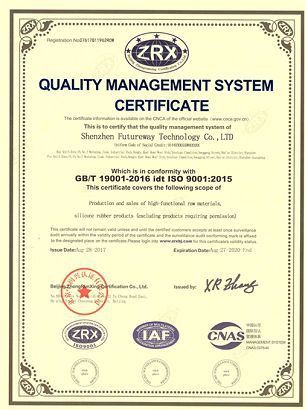


Our Factory
Futureway is a private material enterprise founded in 2010 by several experts from world's top 500 material companies. The company is committed to breaking through the technical and application barriers in the field of high-tech materials, focusing on the building and application development of the technology platform of fluoropolymers and silicone materials.

FAQ
Q: What are silicone sponges made of?
Q: What Is Silicone Sponges?
Q: What is the difference between silicone foam and sponge?
Q: What are the benefits of silicone foam?
Q: What are 3 of the best qualities of silicone?
Q: How do you clean silicone foam?
Q: What is the difference between neoprene foam and silicone foam?
Q: Which is better neoprene or silicone?
Q: Is silicone foam oil resistant?
Q: What is the Young's modulus of silicone foam?
Q: Is silicone foam flammable?
Q: What is the conductivity of silicone foam?
Q: What are the applications of silicone foam?
Q: What is the mechanism of silicone foam?
Q: What is the difference between silicone and polyurethane foam?
Q: What is silicone foam used for?
Q: What is silicone foam sheet used for?
Q: What are the benefits of using silicone?
Q: Is silicone foam waterproof?
Q: Is polyurethane foam better than EVA foam?
As one of the most professional silicone sponges manufacturers and suppliers in China, we're featured by quality products and competitive price. If you're going to wholesale customized silicone sponges made in China, welcome to get quotation from our factory.
Acoustic Vent Membrane, Silicone Foam Gasket Material, Military Grade Teflon Tape