


Solid Silicone Rubber
What Is Solid Silicone Rubber
Solid silicone rubber is a high temperature vulcanized rubber that has long polymer chains and a high molecular weight. The material is quite flexible, making it ideal for sealing and gasketing applications. The material's hardness is measured in Shore A and can be manufactured in various degrees of hardness (from 25 to 70 shore A, with 25 being very soft to 70 being hard), and this doesn't take away from the material's high strength.
Advantages of Solid Silicone Rubber
Electrical Insulation: Solid silicone rubber can protect against electrostatic discharges and can act as shielding for electronics and electrically sensitive equipment.
High Temperature And Heat Resistance: Solid silicone rubber has a very wide operating temperature that lies between silicone sponge and silicone foam (between -80 and 500-degrees Fahrenheit)
Abrasion Resistance: Rubber is a non-abrasive material that will not scratch or damage sensitive items.
Very High Strength: Much stronger than silicone sponge and silicone foam, solid silicone rubber can withstand high torque and pressure. The material has a tensile strength of up to 800 psi.
Resistant To UV, Ozone, And Solvents: High resistances make the material useful in nearly any condition.
Excellent Performance: On sealing, cushioning, soundproofing, and other challenging applications.


Why Choose Us
Professional Team
We have a team of skilled and experienced professionals who are well-versed in the latest technology and industry standards. Our team is dedicated to ensuring that our customers get the best service and support possible.
Quality Control
All goods will undergo strict quality inspection before shipment. always insists on providing high-quality products. We firmly believe that quality is the basis of everything.
One Stop Solution
From the begining inquiry and throughout the entire process until you receive the goods. we are dedicated to supporting you every step of the way.
Quality Products
We use only the highest-grade materials and advanced manufacturing techniques to produce products that are reliable, durable, and perform to the highest standards.
Competitive Price
We have professional sourcing team and cost accounting team, stive to reduce cost and profit and provide you a good price.
Sustainable Development
Establish a good reputation and brand value in the industry, and promote the sustainable, stable, rapid and healthy development of the enterprise.
Why use Solid Silicone Rubber
Silicone rubber is used mostly because of its versatility and ability to perform within different environments, making it an excellent choice for various industrial applications. Different grades of silicone rubber have varying degrees of properties and benefits, therefore it is essential to understand which grade to use for specific applications. But what are some of the key properties of silicone rubber?


Temperature Resistance: Silicone rubber is well-known for its exceptional temperature resistance properties, making it suitable for use in extreme temperature environments. It can maintain its mechanical and physical properties at temperatures ranging from -60°C to 260°C (depending on the grade selected). This temperature resistance makes it a popular choice in industries such as aerospace, automotive, and construction, where components need to withstand extreme temperatures on a frequent basis.
Physical Properties: Silicone rubber has excellent physical properties, including high flexibility and elasticity, good tear resistance, and low compression set. It also has a low modulus of elasticity, which means it can deform without breaking or cracking. These properties make it an ideal material for use in gaskets, seals, and O-rings that require excellent sealing and pressure resistance.
FDA Approval: Certain grades of silicone rubber are approved for use by The Food and Drug Administration (FDA), making it a suitable material for food and beverage processing applications. It is also biocompatible and safe for use in medical applications such as implants, tubing, and surgical tools. The FDA approval and biocompatibility of silicone rubber make it a popular choice in these industries, among others.
Resistance Properties: Silicone rubber has exceptional resistance properties, including resistance to chemicals, water, and weathering. It is also resistant to ozone and UV radiation, which can cause degradation to other elastomers. These resistance properties make it ideal for use in harsh environments, such as chemical processing plants, where components must withstand exposure to corrosive chemicals and fluids.
Durability: Silicone rubber is known for its durability , making it an ideal material for use in applications that require components to last for extended periods. Its resistance to degradation from UV radiation, ozone, and weathering means that components made from silicone rubber can withstand exposure to the elements without losing their mechanical and physical properties.
Liquid silicone rubber has the feature of good liquidity, fast vulcanization, more safety and environmentally friendly, can meet the request of food grade.
Solid silicone rubber has the feature of high temperature resistance, cold-resistance, solvent resistance, antisticking and electrical isolation, the application is very wide.
The vulcanizing machine of liquid silicone rubber is injection moulding machine, it has the advantages of simple production process ( a worker get the material and mix A&B components together at certain temperature, then get the final products soon), high precision, high output, less manpower, less electric and less material.
The vulcanizing process of solid silicone rubber is more completed, firstly mix them by mixing rolls, secondly cut them to the suitable size by cutting machine, thirdly put them into mould, then compression moulding at certain temperature by pressure forming machine.
How Is Solid Silicone Rubber Made
Solid Silicone Rubber is an elastomer of cross-linked polymer chains containing silicon and oxygen. The basic steps in silicone rubber manufacturing include the following:
Step 1: Mixing
Silicone polymers, fillers, and additives are mixed into a homogenous raw material compound. The specific ingredients are customized based on the desired properties of the end product.
Step 2: Compounding
The raw material is kneaded under heat and pressure to disperse all ingredients adequately. This produces an uncured plastic material called a base compound that can be molded into different forms.
Step 3: Shaping
The base compound is shaped by extrusion (for hose, tubing, etc.), rolling out into sheets, or molding into more complex parts using injection or compression molding processes. These shapes will become the final product after vulcanization.
Step 4: Vulcanization
The shaped material undergoes vulcanization, which uses a curing agent that generates heat to cross-link polymer chains. This may be done at either high temperatures (in a process called High-Temperature Vulcanization or HTV) or at room temperature (called Room Temperature Vulcanization or RTV).
In HTV, parts are vulcanized in a heated press for several minutes. This produces high-strength silicone rubber best for industrial applications. RTV uses a platinum-based catalyst allowing cross-linking to occur at ambient temperatures. RTV silicones can cure relatively quickly, within 24 hours, and are suitable for sealing and bonding.
Step 5: Post-treatment
The vulcanized parts sometimes undergo final stabilizing or surface treatments like waxing or coating before being cut and finished into end products. These post-treatments improve durability and appearance.
What Is Solid Silicone Rubber Used For
Solid Silicone Rubber is a popular material for use in the aerospace and defence industries due to its excellent temperature resistance properties. Frequently used for components such as gaskets, seals, and O-rings, it can withstand extreme temperatures and maintain its elasticity after prolonged use. Specific grades of silicone including electrically conductive silicone rubber, MF775 silicone rubber, fluorosilicone rubber and HT800 silicone sponge rubber are among the most common grades used for aerospace and military applications. This is due to their higher temperature resistance or ability to perform when exposed to volatile fuels or chemicals.
The automotive & rail industry utilises silicone rubber in various applications such as gaskets, seals, hoses, and vibration dampening components due to its high-temperature resistance and chemical resistance properties. Specific grades such as silicone sponge rubber, electrically conductive silicone rubber and HT800 Silicone are used in automotive applications for noise reduction, thermal insulation, and electromagnetic interference (EMI) shielding. In the rail industry MF775 has been designed specifically for London Underground applications and offers fire retardancy capabilities, making it certified for use on passenger carrying trains.
Solid Silicone Rubber is widely used in the electronics industry due to its electrical insulation properties. Electrically conductive silicone rubber is used for EMI shielding and grounding in electronic applications. Meanwhile, silicone sponge rubber and HT800 silicone grades are used as a thermal insulation material for electronic devices.
Our standard Silicone rubber is FDA approved, making it a suitable material for food and beverage applications. It is used in food processing equipment such as gaskets, seals, hoses, and tubing due to its ability to withstand high temperatures, resist chemicals, and avoid bacterial growth. Additionally, metal detectable silicone rubber is often used within the sector, predominantly for the process of preventing contamination.
Silicone rubber is widely used in the medical industry due to its biocompatibility and resistance to bacterial growth. FDA Approved silicone rubber is used in various medical applications such as implants, tubing, gaskets, and seals. It is also used in surgical tools and devices due to its durability and longevity of life. HT800 can also be used for medical equipment within the industry, as well as for shock and vibration reduction applications.
There are a huge variety of silicone rubber grades available. Silicone or polysiloxane is a polymer that is made up of the functional group siloxane. Siloxane is a chain of silicon and oxygen atoms that are frequently combined with carbon and hydrogen.
Silicone rubber is an elastomer that is non-reactive, highly stable and resistant to all manners of chemicals and temperatures. Due to these physical properties, silicone is frequently used in industries from pharmaceuticals to automotive.
General Purpose Silicone Rubber
General-purpose grades of silicone are used across a vast range of industries and applications due to their incredibly versatile properties. They can operate in low temperatures and also, thanks to their heat resistance, in very high temperatures. They are also naturally translucent and can be easily pigmented to match any required colour.
The general-purpose silicone rubbers are perfect for extrusion profiles and silicone moulds for mould making. They are also commonly used in both tubing and sealants for the food and pharmaceutical industries as well as silicone parts in the automotive industry and electrical insulation as they are non-stick, with incredible tensile strength and chemical resistance.
Weather Resistant Silicone Rubber
Silicone is undoubtedly one of the most impressive weatherproof polymers. This makes it a brilliant choice if your application will see tough environmental conditions where weathering can typically occur.
Silicone offers phenomenal technical properties when met with harsh conditions. Where other rubbers would crack and harden over time, silicones' resistance to UV light, ozone, oxygen salt and more helps them to stay intact through tough conditions.
Heat Stabilised Silicone Rubber
Heat Stabilised grades of silicone contain an additive enabling them to operate at temperatures up to 260°C. These are available from 30°Shore A to 80°Shore A.
This grade's ability to withstand such extreme temperatures makes it useful for soo many applications. Because of its impressive elasticity as a polymer, the rubber can actually stretch with the impact of the heat and subsequently go back to its original form once cooled down to around room temperature.
High-Temperature Silicone Rubber
This grade of silicone rubber is brilliant for a vast range of applications, this is because it has limited pigment due to cream coloured based material and has a maximum operating temperature of up to 300°c. It is available in a range of hardness from 40 Shore A to 80 shores A.
High Tear Strength Silicones
High tear strength grades of silicone are FDA approved and are available from 50°Shore A to 70°Shore A. Naturally, these polymers are translucent, however, they can be pigmented to any colour you may require.
The particular grade is specifically designed to have higher elongation and tear strength than general-purpose silicone. It is commonly used for mouldings and gaskets as it is more resistant to abrasion.
Steam Resistant Silicone Rubber
Silicone rubber is often required in applications where steam is typically present. This is because there are often extremely high temperatures and pressure. Unlike most other polymers, silicone performs very well when met with steam.
Platinum Cured Silicone
Silicone rubber may be cured by either a platinum-catalyzed cure system, a condensation cure system, a peroxide cure system, or even an oxime cure system. Platinum cured silicone is a silicone rubber that has been through a curing process where the elastomer's two parts become crosslinkers. Also known as addition cure silicone rubber, it exhibits the lowest long-term shrinkage and has longer shelf lives than other mould rubbers.
During the curing time, the rubber is crosslinked using a platinum catalyst rather than a peroxide catalyst used for other silicone grades. This material does not require post-curing, is more optically translucent and has a high tear strength.
Properties of Solid Silicone Rubber
Steam Resistance And Flame Retardancy
The general resistance of silicone rubber to steam, flame, and heat makes it an excellent material for high-temperature applications like food prep situations. This also makes it ideal for industrial applications that use heat-inducing machinery and processes.
Food-Grade And Medical-Grade Ratings
Among the other rubber materials, silicone rubber can withstand the rigorous testing requirements to declare a material acceptable for food or medical applications. It also doesn't use harmful materials like plasticizers or chemicals like BPA.
High Resistance To Compression Set
This is possible through the curing process that silicone rubber goes through. It can maintain its original mechanical properties over a long time.
Inertness
This is one of the properties that make silicone rubber ideal for medical purposes. It does not react even if it interacts with biological and chemical elements. That means it won't trigger allergic reactions even upon skin contact.
Resilience And Rebound
Silicone rubber is flexible and will always return to its original shape even after twisting, bending, or folding. But this will still depend on the original hardness measure of the silicone before its application.
Tensile Strength
Some silicone rubber types can withstand stretching up to 700% - but this is for exceptional grades only. Still, the usual tensile strength of 200 to 1,500 psi makes it a durable material.
Certifications
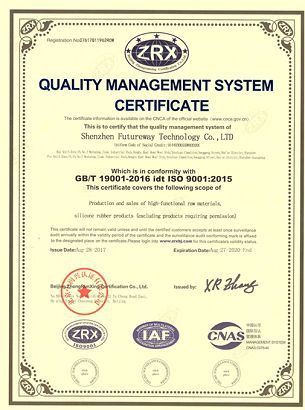


Our Factory
Futureway is a private material enterprise founded in 2010 by several experts from world's top 500 material companies. The company is committed to breaking through the technical and application barriers in the field of high-tech materials, focusing on the building and application development of the technology platform of fluoropolymers and silicone materials.

FAQ
Q: What are the properties of silicone rubber?
Q: What is the monomer of silicone rubber?
Q: How do you harden silicone rubber?
Q: What is the polymer main ingredient of rubber?
Q: What is the difference between silicone rubber and latex rubber?
Q: Are there different types of silicone rubber?
Q: What are the advantages of silicon rubber?
Q: What is solid silicone made of?
Q: What is the difference between liquid silicone rubber and solid silicone rubber?
Q: What is solid silicone used for?
Q: What are the applications of silicone rubber?
Q: What is the difference between silicone and silicone rubber?
Q: Is polyurethane rubber better than silicone rubber?
As one of the most professional solid silicone rubber manufacturers and suppliers in China, we're featured by quality products and competitive price. If you're going to wholesale customized solid silicone rubber made in China, welcome to get quotation from our factory.
Silicone Extrusion, Chemical Resistance Of Ptfe, High Speed Low Loss Dielectric Tape Wrapping